The 10 must-know retail trends for 2026
Retail is no longer transforming. It's reinventing itself. In 2026, the lines between physical and digital commerce continue to blur. Artificial intelligence is becoming the backbone of commercial strategies, and consumers are demanding more than ever memorable experiences. For retailers, staying competitive is no longer just about price or convenience: it's theintensity of the experience offered that makes the difference. Here are the 10 major trends redefining retail in 2026 and the technologies that embody them.
1. Experiential retail becomes the norm
Gone are the days of the store as a mere transaction point. In 2026, the physical point of sale becomes a space for showcasing, emotion, and storytelling. At the NRF (National Retail Federation), a strong signal emerged from the discussions: in an AI-dominated context, the brands that perform best are those that place experience at the heart of every customer interaction, both in-store and online. Far from being marginalized by digital, the store asserts itself as a hub for trends, often amplified by social media.
Concerts, book signings, immersive installations, sensory journeys: physical stores are vying with creativity to generate what's called "retailtainment": the fusion of retail and entertainment.
The role of the hologram?
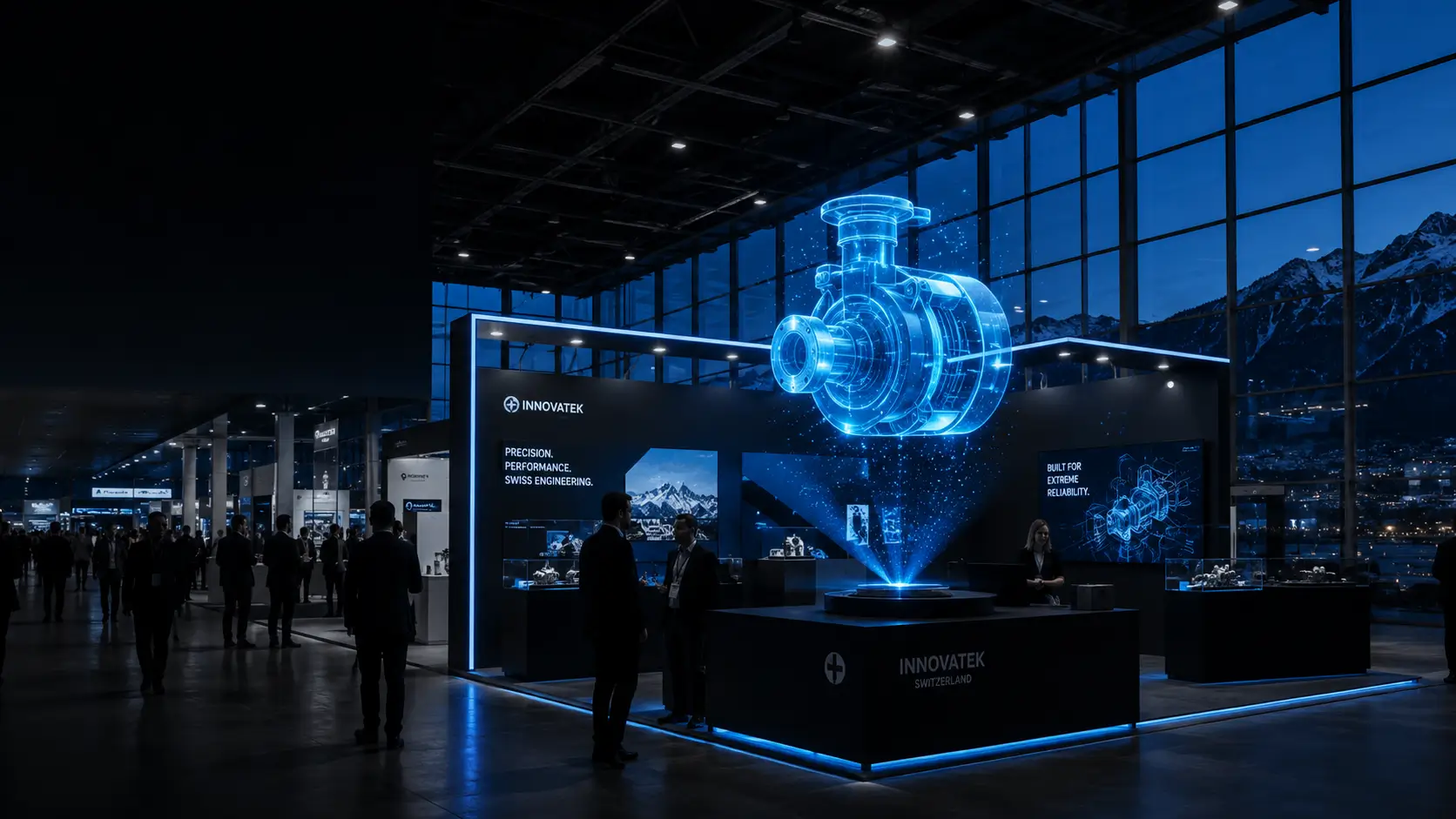
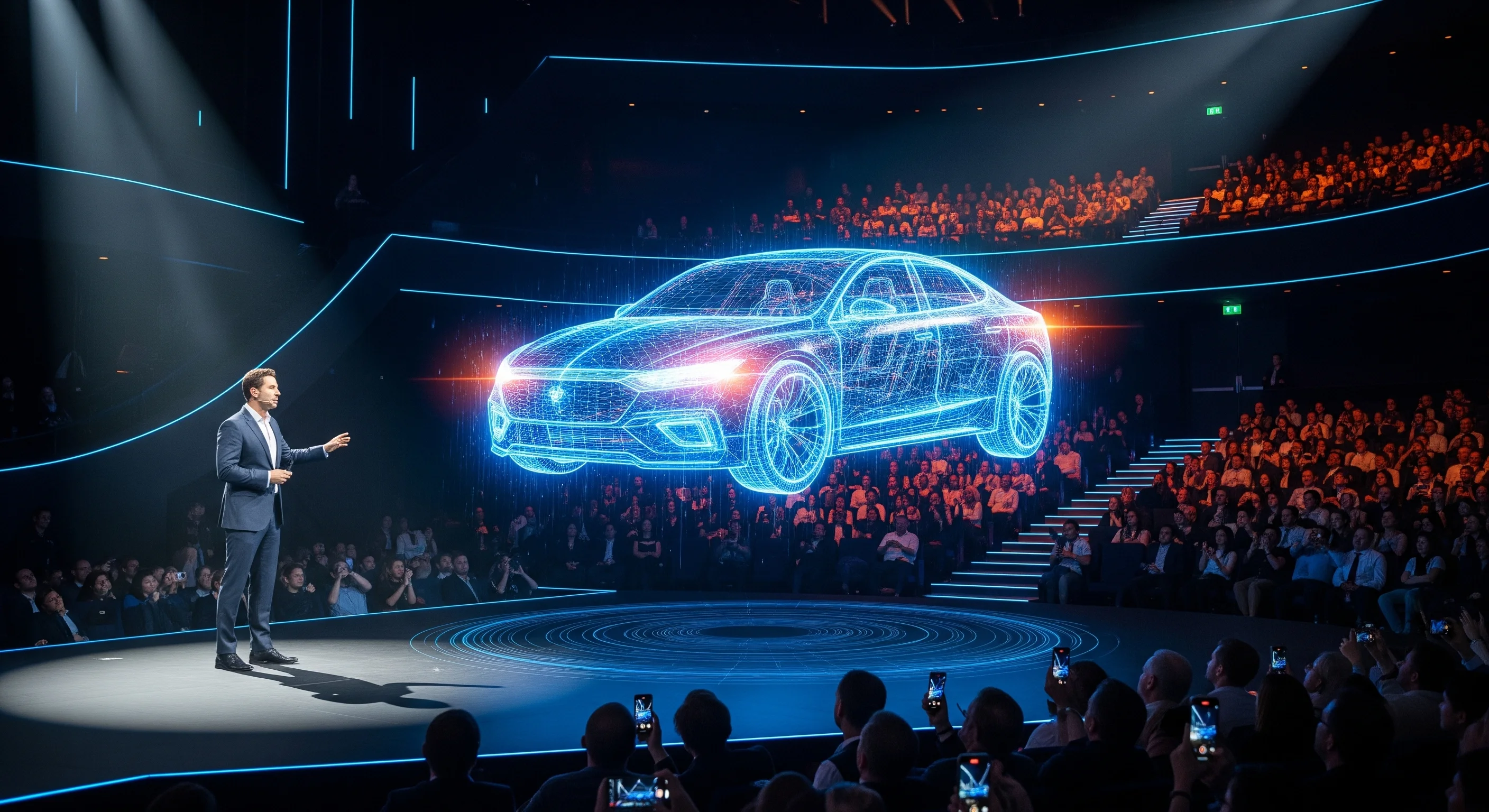
The holographic solutions fit perfectly into this logic. A holographic fan in a shop window, a Holobox that tells a product's story, a large-format projection for an event activation: each format captures attention where traditional media no longer have the desired effect.
→ The Hologram at the 2026 Agricultural Show
2. Phygital: The physical-digital fusion becomes complete
According to a SOTI study conducted among 13,000 consumers in 11 countries, 90% of shoppers now navigate between physical stores and web platforms, expecting a seamless experience between these two worlds. The choice of channel now depends on usage, not loyalty to a brand.
Phygital is no longer a competitive advantage; it's the expected standard. Brands that haven't yet adopted this are perceived as lagging behind.
3. AI at the Heart of Personalization
By 2026, Gartner estimates that 80% of marketing interactions will be driven by AI. In retail, this technology is becoming essential at every stage of the customer journey: product recommendations, automated customer service, collection management, visual creation, quality control. NRF 2026 summarized this reality with a phrase: "The answer is AI."
The aim is not to replace human interaction, but to enrich it and finally achieve large-scale personalization.
Next-generation Holoboxes can integrate intelligent and dynamic content, adapted to the context (time, event, customer profile), to deliver the right message at the right time, with unparalleled visual impact.
4. Agentic Commerce: Frictionless Shopping
We are witnessing the emergence of agentic commerce, notably driven by Google with its Universal Commerce Protocol. The idea? To allow consumers to buy directly from a conversational environment such as a search engine, chatbot, or voice assistant, without interrupting their journey.
OpenAI is already integrating payment functionalities into ChatGPT. Product search no longer relies solely on traditional search engines, but on generative AIs. For brands, this means ensuring the quality of their product data and their visibility in these new environments.
5. Social Commerce Becomes a Full-Fledged Sales Channel
Instagram, TikTok, Pinterest: social platforms are no longer just for inspiration. They sell. By 2026, social commerce will integrate advanced transactional features, and live shopping events will bring together communities of consumers ready to buy in real-time.
This channel is particularly effective for lifestyle, fashion, beauty, and food brands, whose communities are highly engaged on these platforms.
An in-store or showroom holographic display naturally generates viral content. Customers film, share, comment. It's an organic driver for social media amplification, without additional media budget.
6. Unified Omnichannel: one seamless journey
Silos between physical stores, e-commerce, mobile, and social media are a thing of the past. By 2026, the most successful retailers will offer a unified customer journey: customers start their purchase on mobile, complete it in-store, and manage returns via an app. Every touchpoint is consistent, seamless, and personalized.
Global e-commerce sales are expected to reach $8.1 trillion by 2026 (Statista). Retailers who fail to offer this continuous experience will lose customers to more agile players.
7. Retail Media: Retailers Become Media Outlets
Major retailers are transforming their physical and digital spaces into advertising platforms. By selling ad space on their own channels (websites, apps, in-store screens), they monetize their audience and first-party data. Advertising margins for these setups can reach 50%, well above traditional product margins.
Global investment in retail media is expected to reach $140 billion in 2026, with an annual growth rate of 12%.
In-store holographic fans and 3D displays naturally integrate into these next-generation retail media setups: impactful, memorable formats perfectly suited for premium brand content.
8. Sustainability: Regulatory Constraint, Strategic Lever
Environmental pressure is intensifying. In France, a €2 tax on small extra-European parcels came into effect in January 2026, and the anti-fast fashion law imposes new constraints on unsold inventory management. At the European level, eco-design regulations are redefining retailers' obligations.
Retailers who integrate sustainability as a competitive advantage, rather than a forced constraint, will build a lasting brand positioning aligned with consumer expectations.
Unlike traditional physical displays (paper POS, stands, disposable totems), a holographic device is reusable and reconfigurable. The same hardware can display different content depending on seasons, launches, or events, resulting in a reduced carbon footprint and optimized cost of use.
9. Post-Purchase as an Extension of the Brand Experience
By 2026, the customer experience no longer ends at payment. Post-purchase, including real-time order tracking, proactive notifications, and simplified return policies, has become a standard expected by consumers. Retailers who neglect this phase lose trust and customer loyalty.
Transforming post-purchase into a true extension of the brand experience is one of the most effective levers for building lasting relationships with customers.
10. Immersive Experience as a Driver of Desirability
Beyond all technological trends, one constant remains: customers want to experience something, not just buy something. Premium brands, luxury, fashion, and cosmetics have understood this well. It's the in-store desirability that builds the brand, generates word-of-mouth, and fosters long-term loyalty.
Immersive formats such as augmented reality, sensory experiences, and event scenography are the tools for this new desirability. Among them, the hologram holds a special place: spectacular without being intrusive, technological without being cold, it creates that moment of pause, that emotion, that memory the brand seeks to embed.
According to Holovisio case studies, holographic devices generate an 80% increase in customer emotional boost compared to traditional displays, and can contribute to 30% additional sales for featured products.
Retail in 2026 is the convergence of three major forces: technology (AI, phygital, hologram), experience (immersion, emotion, memorability), and responsibility (sustainability, transparency, post-purchase relationship).
The brands that will stand out won't necessarily be the largest, but the most consistent — those that have successfully aligned their offering, sales space, and communication tools around a clear and differentiating promise.
In this landscape, the hologram is not a gadget: it's a strong signal, one of a brand that embraces its ambition and knows that in a world saturated with images, only the extraordinary captures attention.
Are you looking to integrate a holographic solution into your 2026 retail strategy? Contact Holovisio experts for a tailored demonstration.
FAQ — The 10 Essential Retail Trends for 2026
Where do you concretely begin to integrate AI into a retail strategy?
AI isn't implemented all at once. Most brands start with a use case that offers immediate high ROI: product recommendations in e-commerce, or inventory replenishment optimization. The next step is to unify customer data (CRM, POS, web) to power a personalization engine. Starting with a pilot on a single channel, measuring, and then gradually expanding is far more effective than a poorly prepared global deployment.
Is agentic commerce accessible to mid-sized retailers or only to e-commerce giants?
Agentic commerce primarily relies on the quality of product data (detailed product sheets, structured attributes, well-populated feeds). This is an undertaking accessible to retailers of all sizes, long before integrating conversational payment features. Mid-sized retailers have every interest in refining their catalog now to ensure visibility in generative AI results, which are becoming a new product discovery engine.
How do you measure the ROI of an in-store experiential setup?
Traditional metrics (traffic, conversion rate, average basket size) remain relevant but are insufficient to capture the full value of an experience. You also need to include: on-site engagement rate (visit duration, hot zones), the volume of spontaneously generated social media content, and changes in NPS (Net Promoter Score) before/after deployment. Some retailers also track the impact on repeat purchases in the weeks following the setup.
Can the post-purchase experience truly build loyalty, or is it just a logistical concern?
The post-purchase experience is one of the most emotionally charged moments in the customer relationship: waiting for an order generates anxiety, and a pleasant surprise (early delivery, personalized message, thoughtful packaging) creates a memorable positive peak. Behavioral psychology studies show that end-of-journey experiences strongly influence overall satisfaction: this is the principle of the "peak-end rule." Reliable logistics is the foundation, but it's the relational and attentive dimension that transforms a satisfied customer into an ambassador.
Boost your ROI with holograms
Your goals, our solution, your results.