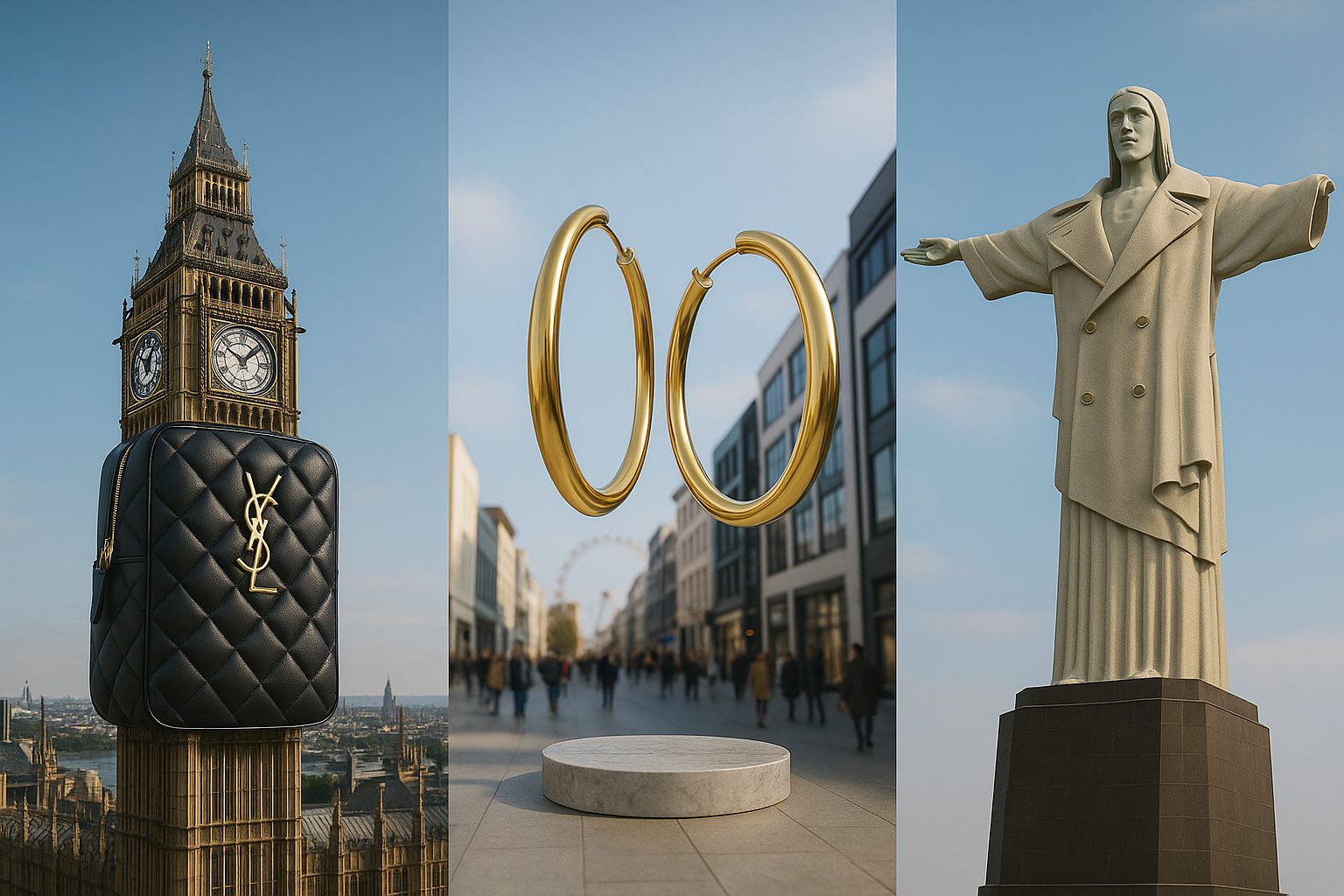
AI in stores: why are cutting-edge retailers going beyond the touchscreen?
Touch screens have transformed the point of sale. But in 2026, consumers expect more: real-time personalization, emotional engagement, immersive experiences. The data is clear and the technologies to answer it exist. Overview of a new trend: AI in stores.
Physical retail under performance pressure
Physical commerce has never been more demanding. Faced with ultra-connected consumers who are used to the personalization of online platforms, retailers must offer much more than a retail space: they want to have an experience.
The numbers speak for themselves. According to research McKinsey, 71% of consumers expect personalized interactions from businesses and 76% say they are frustrated when this is not the case.
In this context, digitizing your point of sale is no longer enough. You have to do it intelligently by choosing tools that can adapt to each visitor, measure engagement, and create a memorable experience.
What the touchscreen can no longer offer
The touch screen has played a pioneering role in the digitalization of retail. It made it possible to inform, to guide and to order independently. But its structural limitations are now becoming an obstacle to performance:
• linear and identical navigation for each visitor, without the ability to adapt to the profile or behavior;
• passive engagement: the screen waits for the client to come to it, without capturing attention or creating a stimulus;
• a total absence of usable behavioral data to pilot the strategy in real time;
• an experience perceived as cold and generic, contrary to expectations of personalization.
The touch screen remains relevant for certain simple transactional uses. But to create commitment, emotion and conversion, other levers are now available and measurable.
AI in stores: from personalization to prediction
Artificial intelligence is fundamentally transforming the relationship between a brand and its visitors. Where the touchscreen displays static content, the AI analyzes visitor behavior in real time to adapt the experience instantly.
The results observed in the field are significant:
- +10 to 15% in additional revenue for retailers deploying personalization programs, with peaks of up to 25% depending on the sector.
- +10 to 15% on conversion rates thanks to a personalized customer experience at the point of sale.
- 40% more revenue generated by personalization leaders compared to the market average.
- -50% on customer acquisition costs for brands that master personalization at scale.
AI is no substitute for human advice. It frees up time for him: by automating repetitive interactions (product information, orientation, presentation), it allows teams to focus on value-added support.
Immersive devices: the engagement that screens cannot create
Combined with AI, holographic devices add a dimension that traditional screens cannot replicate: the presence effect. A product presented in 3D, from all angles, with content adapted to the visitor's profile is an experience that captures attention and stays in memory.
The first field data confirms this. Brands have seen sales increases ranging from +12 to +18% on products highlighted via interactive holographic displays.
The market confirms this fundamental trend: the retail holographic display sector was valued at 3.4 billion dollars in 2024, with a projected growth of 25% per year until 2034.
Measurable performance, not a promise
One of the decisive advantages of AI and holographic solutions on the classic touchscreen: every interaction is measurable. Commitment time, downtime, focus area, the most reactive profiles: this data feeds directly into the commercial strategy and allows content to be adjusted continuously.
This is what retailers now call the “connected shelf”: a point of sale that behaves like a digital media, with the same measurement and optimization capabilities.
For marketing and sales teams, this means being able to answer concrete questions: what content converts best? For which visitor profile? At what time? These insights, which cannot be obtained with a passive touchscreen, become a direct competitive advantage.
The transition to AI and immersive solutions at the point of sale is not a sudden revolution. It is a logical evolution driven by consumer expectations and the performance needs of retailers. The data is there, the technologies are mature, and the results in the field are documented.
Retailers that are reaching this milestone today are not content with modernizing their space. They have a measurable competitive advantage: more engagement, actionable data, and an experience that their customers won't find online.
Frequently asked questions - AI in stores
Do you have to replace everything at once?
No The transition can be gradual. The recommended approach: identify high-impact contact points (entrances, strategic product areas) and deploy new technologies there as a priority, while maintaining existing mechanisms where they remain relevant.
Are these solutions accessible to SMEs?
Yes. Costs have fallen significantly with the maturity of the market. The sustainability of the content, its instant updating and the measurable gains in conversion make these solutions profitable over 12 to 24 months, including for medium-sized organizations.
How do you measure ROI?
Through precise KPIs: time of commitment to the device, conversion rate on the products highlighted, evolution of the average basket, behavioral data collected in real time. These metrics allow content to be adjusted continuously and performance to be documented to management.
Does technology dehumanize hospitality?
It is the other way around. By automating repetitive tasks, AI frees up field teams to focus on advice and human relationships with high added value. Feedback from pilot brands systematically shows an improvement in perceived customer satisfaction.
Sources:
- McKinsey, The value of getting personalization right, 2021
- McKinsey, Personalizing the customer experience: Driving differentiation in retail, 2020
- McKinsey, What is personalization? , 2023
- Packaging Digest, Holographic Displays Drive 18% Sales Lift in Retail Pilots, February 2026
- GM Insights, Holographic Display Market Report, 2025
Boost your ROI with holograms
Your goals, our solution, your results.