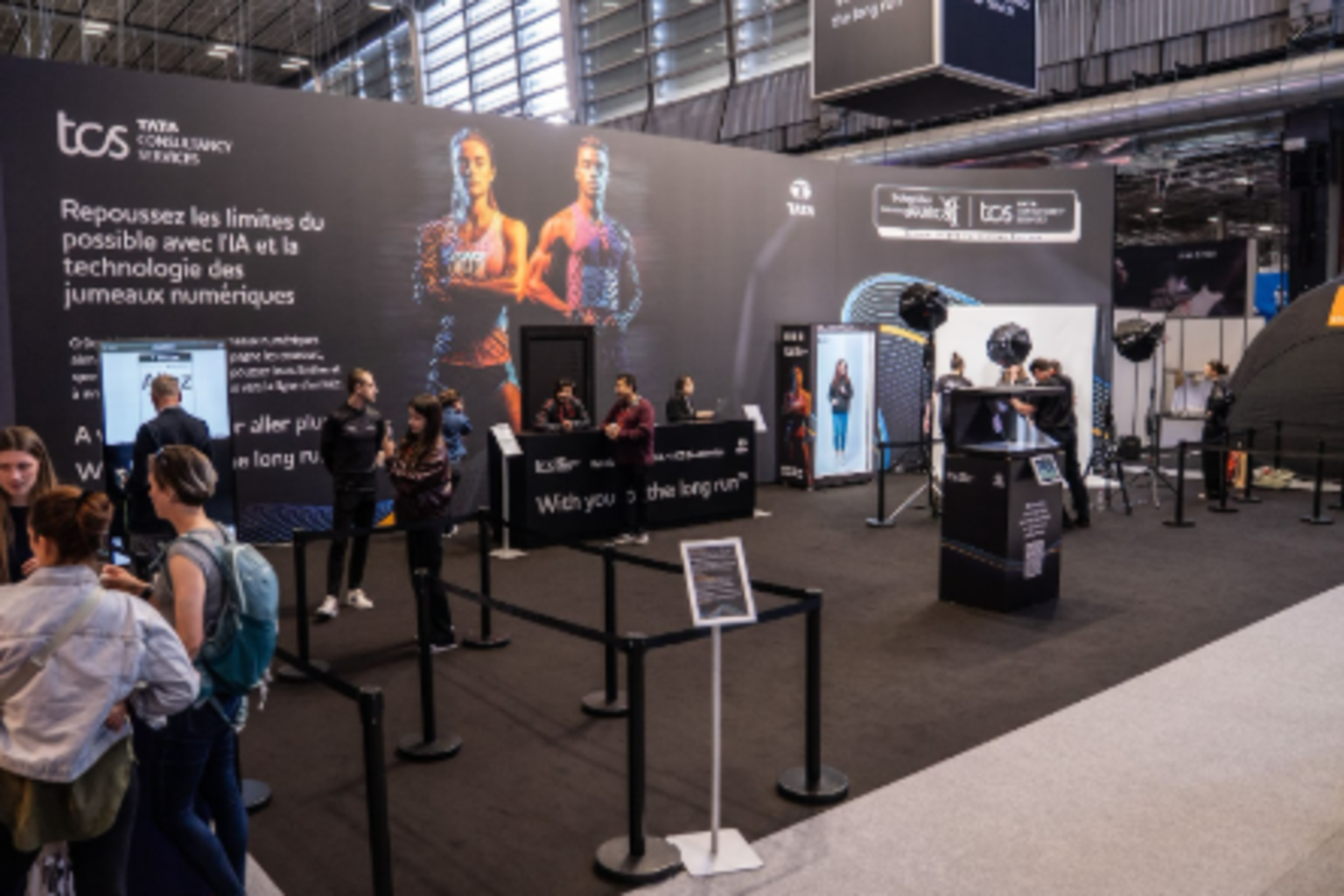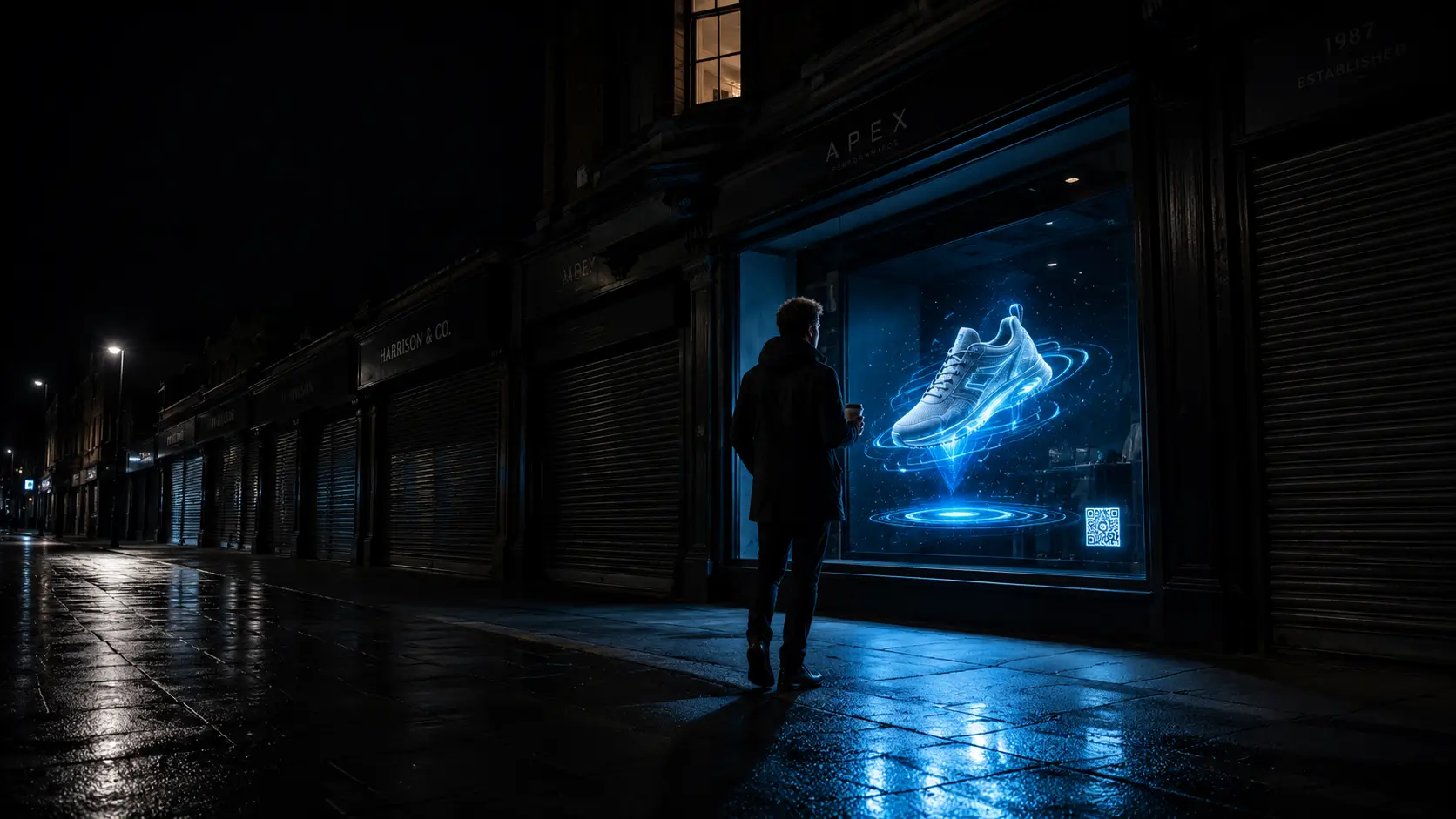
A holographic window display turns the storefront into moving media: a holographic fan or a glazed HoloBox set inside the vitrine, projecting floating 3D content readable in daylight. Rental starts at 300 to 500 euros per day for a fan, turnkey packages at 2,000 euros, and the audience is every person who passes.
The Or en Cash deployment settled the argument in the simplest way possible: put holographic displays into working French storefronts and watch which windows the street stops for. A window that moves beats a window that does not, every trading day.
This guide is the storefront edition of that finding for US and UK retailers: why the window is the store's first medium, which holographic formats work behind glass, how to keep them readable in daylight, and the signage rules to check before plugging in. Holovisio, the company behind hologramme.co, runs these deployments turnkey, and the digital signage page carries the wider display catalogue.
The window is the store's first medium
Before a shopper sees an ad, an email or an app notification from your brand, they see the window. It is the only channel with zero cost per impression, a guaranteed local audience that renews itself daily, and total creative control, and most retailers still print it.
The arithmetic favors motion. A pavement delivers its footfall whether the glass earns it or not; the only variable is the stop. Third-party benchmarks put holographic displays at up to 4 times the visibility of standard formats with up to 70 percent more engagement (figures vary by content and context), and in a window, visibility is the entire job description. A window baseline is also the cheapest study in retail: one counter, one week, one before and after.
The medium also compounds. A printed window is one message per install; a holographic one is a calendar, with campaign loops swapping as files at the pace of the promo plan rather than the pace of a print run.
And the window works the only shift no staff can: after closing. High streets are walked at eight and browsed through glass at ten, the holographic loop is the only salesperson on duty, and the evening glow is where the format is at its most photogenic.
Which holographic formats work behind glass
Two families from the Holovisio catalogue answer the window brief, and the glass itself decides between them. A note on transparent display films: the market sells them, and the same brief is answered in our catalogue by the fan and the case, with daylight performance the deciding argument.
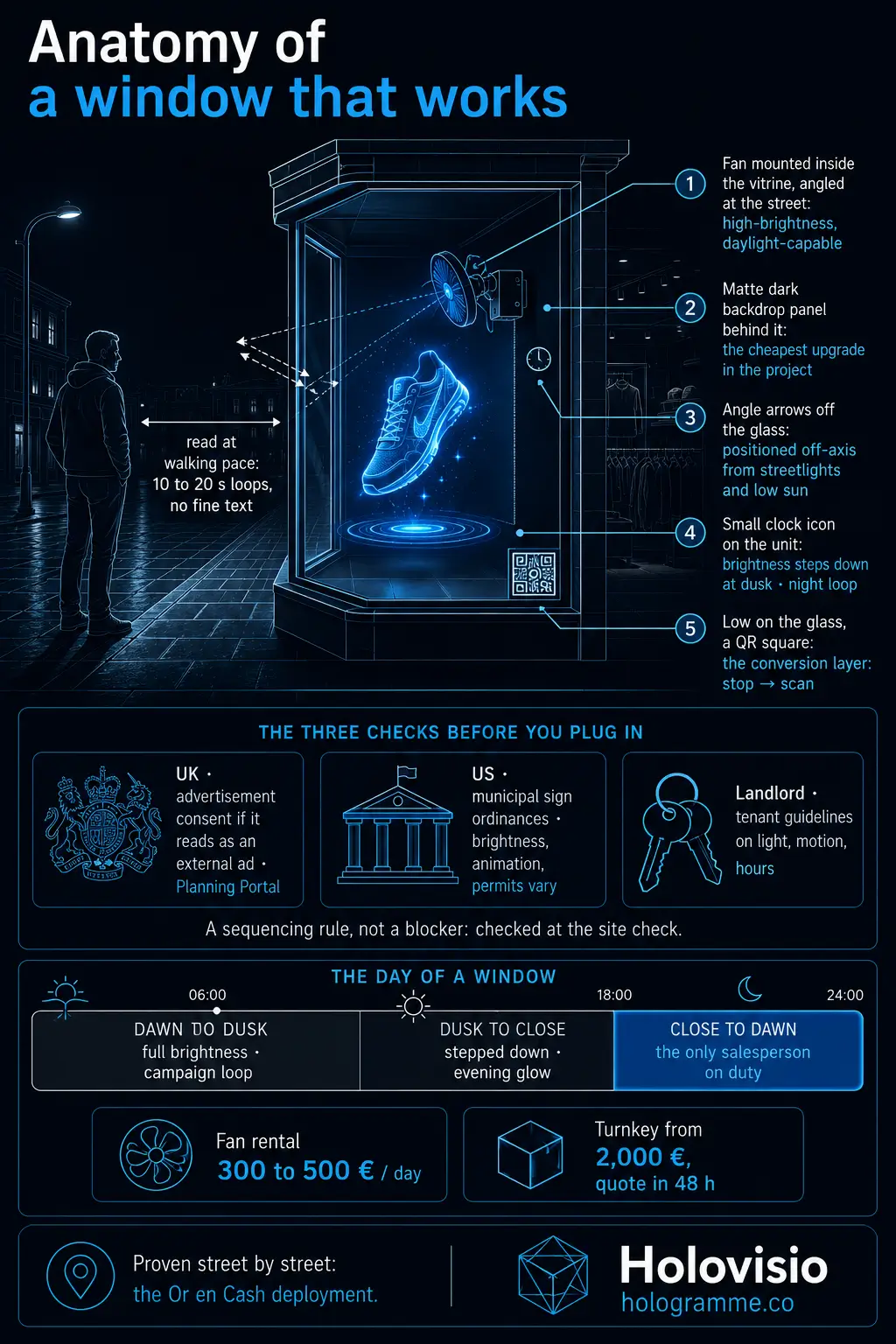
• The in-window holographic fan. Mounted inside the vitrine, it projects a floating 3D animation straight at the street: the highest visibility per euro of any window format, compact enough to live inside the merchandising, and the workhorse of storefront deployments. It is also the format the Or en Cash windows made familiar to French high streets.
• The HoloBox window formats. The glazed case in S or M sits on a shelf or plinth in the display, daylight-readable and protected, holding a product at real scale. It is the format for windows that sell one hero object rather than announce a campaign.
• The flagship entrance. Where the window is a whole facade, the life-size HoloBox at the entrance extends the logic inward: the display stops the street, the entrance converts the stop.

Daylight, glare and glass: making it readable
The window is the hardest lighting environment in retail, and the craft is what separates a glowing display from a grey one. Four rules do most of the work.
• Brightness against the sun. High-brightness, daylight-capable units are the entry requirement; a device specified for a dim showroom disappears behind glass at noon.
• Dark backdrop inside the display. Holographic formats render light, so the darker the backdrop behind them, the more the content carries. A matte dark panel inside the vitrine is the cheapest upgrade in the whole project.
• Angles against reflections. Position the device off-axis from streetlights and low sun so the glass shows the hologram rather than the street; the site check maps the reflection paths before the quote.
• A schedule for the light. Brightness steps down with dusk and content can shift to a night loop, which keeps the display legible at 3 pm and neighborly at 11 pm.
• Content cut for the pavement. Passing pace is faster than an aisle: 10 to 20 second loops, one subject, no fine text, and the brand mark readable at a glance from across the street.
Signage rules before you plug in
An animated, illuminated window sits closer to signage regulation than most retailers expect, and the rules are local by nature. Three checks cover the exposure.
• United Kingdom. Illuminated advertisements can require advertisement consent from the local planning authority, and the deciding question for a window-facing display is whether it functions as an external advertisement; the Planning Portal is the reference, and conservation areas and listed buildings tighten everything.
• United States. Sign ordinances are municipal: brightness, animation and permit requirements vary city by city and even district by district, so the check is a call to local planning or the landlord's sign criteria, not a national rulebook.
• The landlord layer. Malls and managed high streets add tenant guidelines on illumination, motion and hours. They are usually the fastest approval to obtain and the most annoying to discover late.
None of this is a blocker; it is a sequencing rule. In most standard high-street cases the answer is a short conversation rather than an application, but the check comes first: Holovisio validates the venue constraints at the site check, and the paperwork, where needed, runs in parallel with content production rather than after it.
From one window to the street
The rollout pattern is the Or en Cash pattern: prove one window with a stop-rate baseline, then scale the format across the estate, the same content files running in every storefront. A QR code on the glass adds the conversion layer, turning the stop into a scan, a signup or a store visit that measurement can see. The calendar is where windows beat every other retail medium: holiday loops staged in an afternoon, sale countdowns updated remotely, and the January window planned in files before December closes.
Budgets stay retail-sized: the in-window fan rents from 300 to 500 euros per day, turnkey packages start at 2,000 euros excluding VAT with delivery, installation and content adaptation included, and quotes return within 48 hours. Rental carries the pilot; the fleet decision follows the numbers.
For the sector-wide picture, read our overview of holograms in the retail industry; for the footfall playbook beyond the glass, how to attract more customers to a physical store continues the argument inside. And the complete guide to holograms maps every format the window can hold. The glass is already paid for; the question is what it broadcasts.
Holovisio, the company behind hologramme.co, designs, produces and operates holographic displays (fans, HoloBox, pyramids, walls, projections) for companies, from Mercedes-Benz to Stryker. Rental or purchase, 3D content included. Request a quote.
By the Holovisio team · hologramme.co
Boost your ROI with holograms
Your goals, our solution, your results.