Ten trends define trade show technology in 2027: AI running booth operations, AI hologram hosts, hands-on product interaction, engineered peak moments, holographic focal points going mainstream, measurement maturity, reusable modular stands, holographic telepresence, content cut for the aisle, and venues acting as data partners. Below, each trend comes with the exhibitor move it demands.
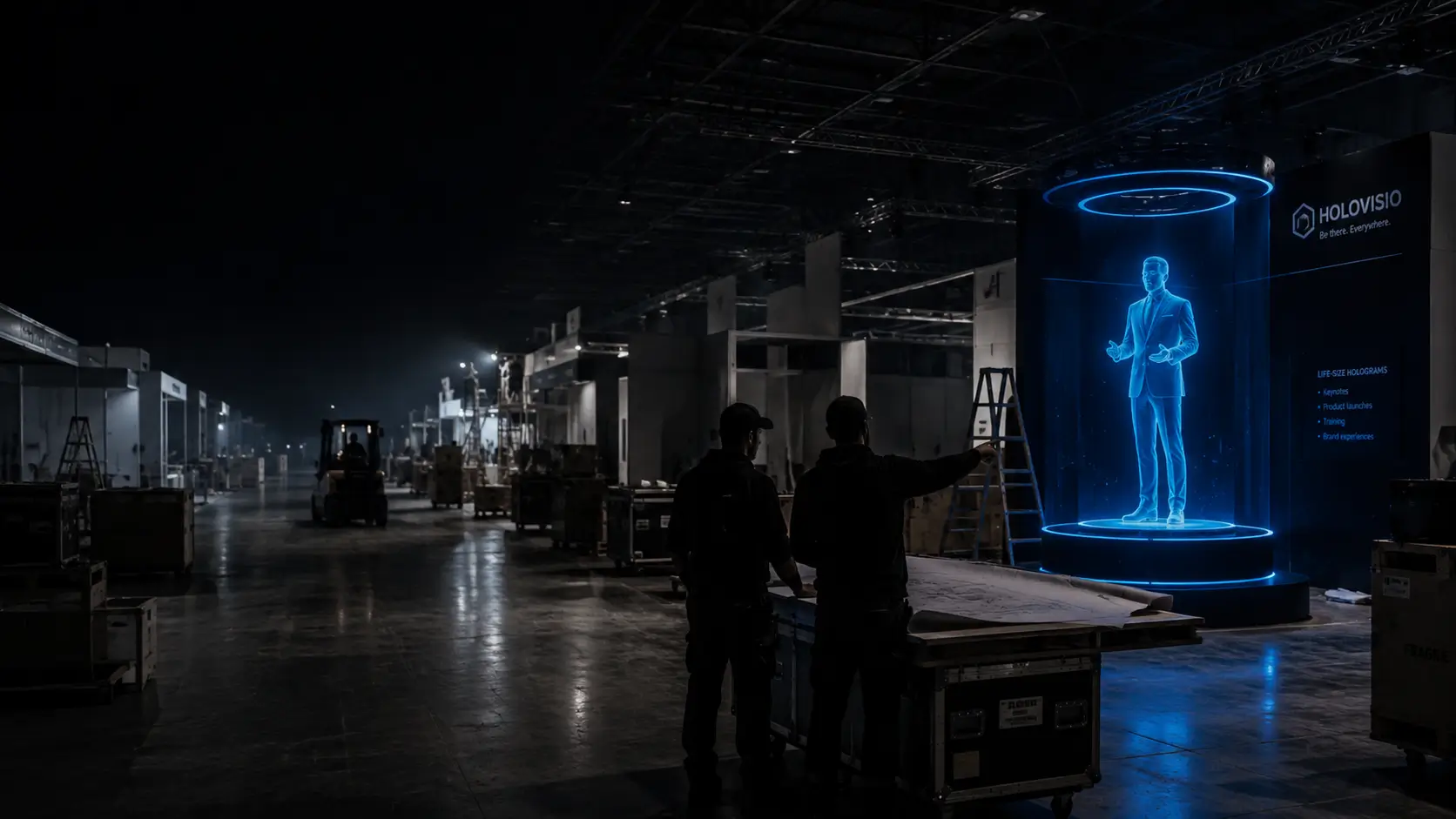
The lesson of 2026 came from stands like the ASUS activation at IT Partners: the winning booth was not the loudest, it was the mostengineered. One product, one holographic focal point, one team choreographedaround the stop.
2027 planning starts now, in the budget meetings of thisquarter, and this list is built for them. Holovisio, the company behindhologramme.co, operates on stands across 20+ countries, and the ten trendsbelow are the ones showing up in exhibitor briefs, whether the calendar saysIMEX America, Confex London, NRF Big Show or a regional expo.
A scope note: this is the technology planning list. Thegeneral case for holographic activations lives in our holograms for events article; the two are complements.
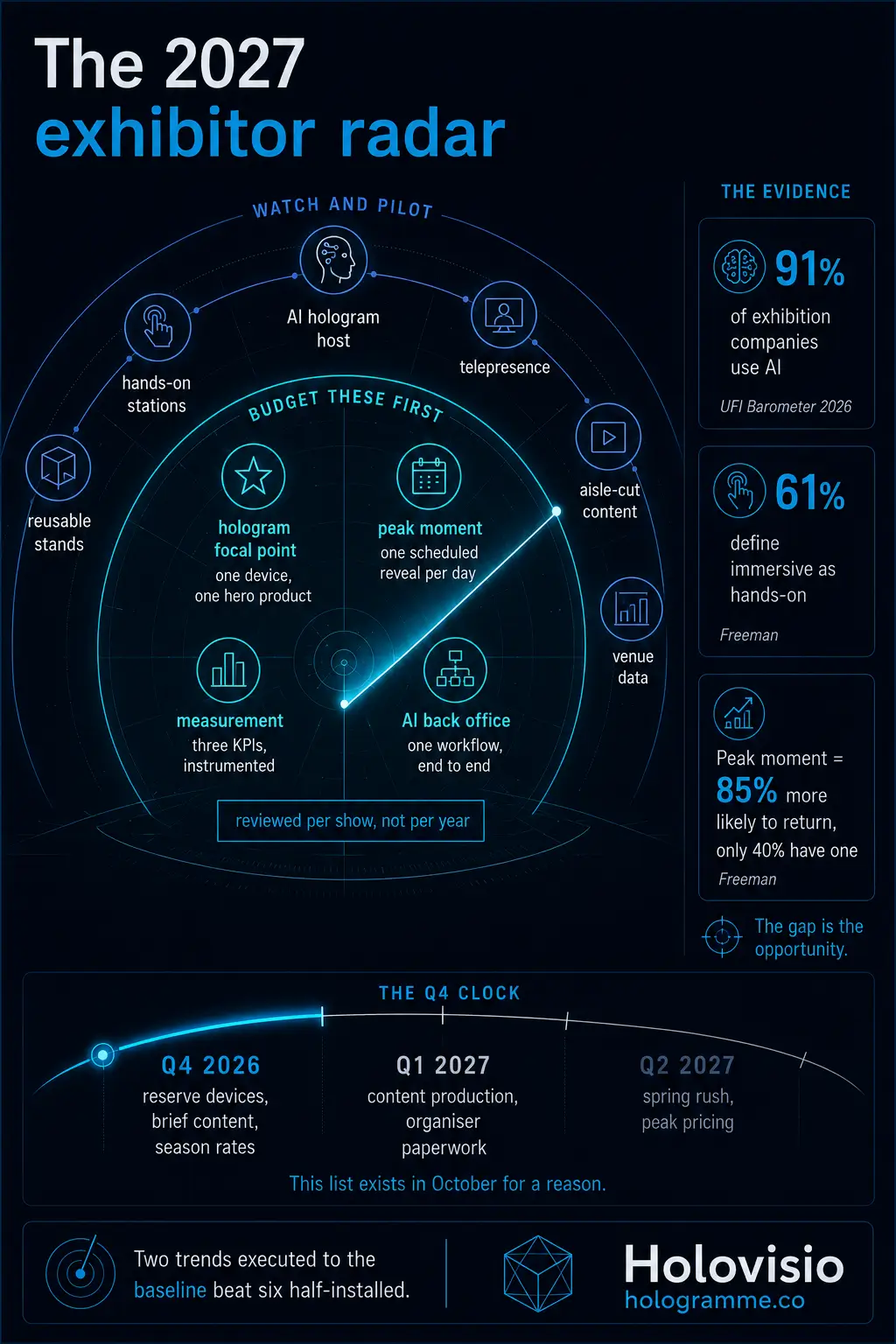
Budget season is also the edge: device reservations,content briefs and season contracts all price better in the fourth quarter thanin the spring rush, which is why this list exists in October and not January.
The tentrends
1 · AI runsthe booth back office.
The exhibition industry's own barometer reports 91percent of companies now using AI, according to UFI's July 2026 Global Exhibition Barometer, and on the stand it lands as operations: lead scoringwhile the conversation is still happening, meeting matchmaking before the showopens, and follow-up drafted before the visitor reaches the next aisle. Theexhibitor move: pick one workflow, automate it fully for one show, and measurethe delta before scaling.
2 · The AIhologram host takes a shift.
The avatar that greets, qualifies with three goodquestions and hands warm intent to the team is moving from novelty to rota. Itworks the halo the display creates, in the visitor's language, without a lunchbreak; the AI hologram pagecarries the formats. The exhibitor move: brief it like a new hire, scopenarrow, and design the handoff to humans before designing anything else;likeness and rights are contracted before production, which is the paperworktrend hiding inside this one.
3 · Hands-onbeats spectacle.
Sixty-one percent of attendees define an immersiveexperience as hands-on interaction with a product, while organizers stilloverspend on multi-sensory wallpaper, according to the Freeman Trends Report.The exhibitor move: cut one decorative line from the budget and fund oneinteraction station where visitors touch, try or drive the actual offer.
4 · Peakmoments get engineered, not hoped for.
Attendees who experience a genuine peak moment are 85percent more likely to return, and only 40 percent report having had one: thegap is the opportunity. The exhibitor move: design one moment per stand, areveal, an appearance, a demonstration with a beginning and an end, scheduledand rehearsed like theatre. The hologram is the most reliable machinery for it:a reveal that floats is a reveal that gets filmed.
5 · Theholographic focal point goes mainstream.
The fan above eye level and the glazed HoloBox at theaisle edge have crossed from differentiator to discipline: a single floatingfocal point that stops traffic while screens carry the information layer. Theexhibitor move: one hologram, one hero product, staff standing at the halowhere the stopped visitors actually are.
6 ·Measurement grows up.
Stop rate, dwell, interactions and qualifiedconversations are replacing badge-count bragging, with baselines set againstthe previous edition of the same show. The exhibitor move: define the threenumbers before the show, instrument them cheaply, and judge every technologyline by the delta it produced. The honest test: if a line cannot name itsnumber before the show, it is decoration.
7 · Thereusable stand wins procurement.
Sustainability pressure and cost discipline point thesame way: modular builds, rented technology, and content that travels as filesinstead of print. The exhibitor move: audit what gets rebuilt and reprinted pershow, then shift the recurring lines to rented hardware and reusable 3D assets.Rented holographic hardware fits the pattern exactly: the device returns, thecontent stays, and next season's stand starts from assets instead of zero.
8 ·Telepresence puts the expert everywhere.
The keynote speaker beamed life-size to a second stage,the specialist present in three cities in one week: holographic telepresence turns scarce experts into schedulable ones. Theexhibitor move: list the people whose presence sells and whose calendars cannottravel, then pilot one remote appearance at a regional show.
9 · Contentgets cut for the aisle.
The 20 to 30 second loop, dark backgrounds, one subject,no fine text: aisle-native content is becoming its own craft, separate from thebrand film. The exhibitor move: brief the loop as its own deliverable with itsown review, not as a crop of the campaign video. The discipline pays twice,since the same aisle-cut loop becomes the social clip the show hashtag actuallyshares.
10 · The venuebecomes a data partner.
Organisers are publishing serious numbers, from footfallpatterns to sector-level economic reporting like Dubai World Trade Centre'sannual impact assessments, and exhibitors are starting to plan against them.The exhibitor move: ask the organiser for last edition's traffic data beforesigning the floor plan, and place the stand where the numbers say the aislesactually flow. Sector data sharpens targeting too: when a venue reports whichindustries drew the international share, the stand plan should know it.
Whichtrends to budget first
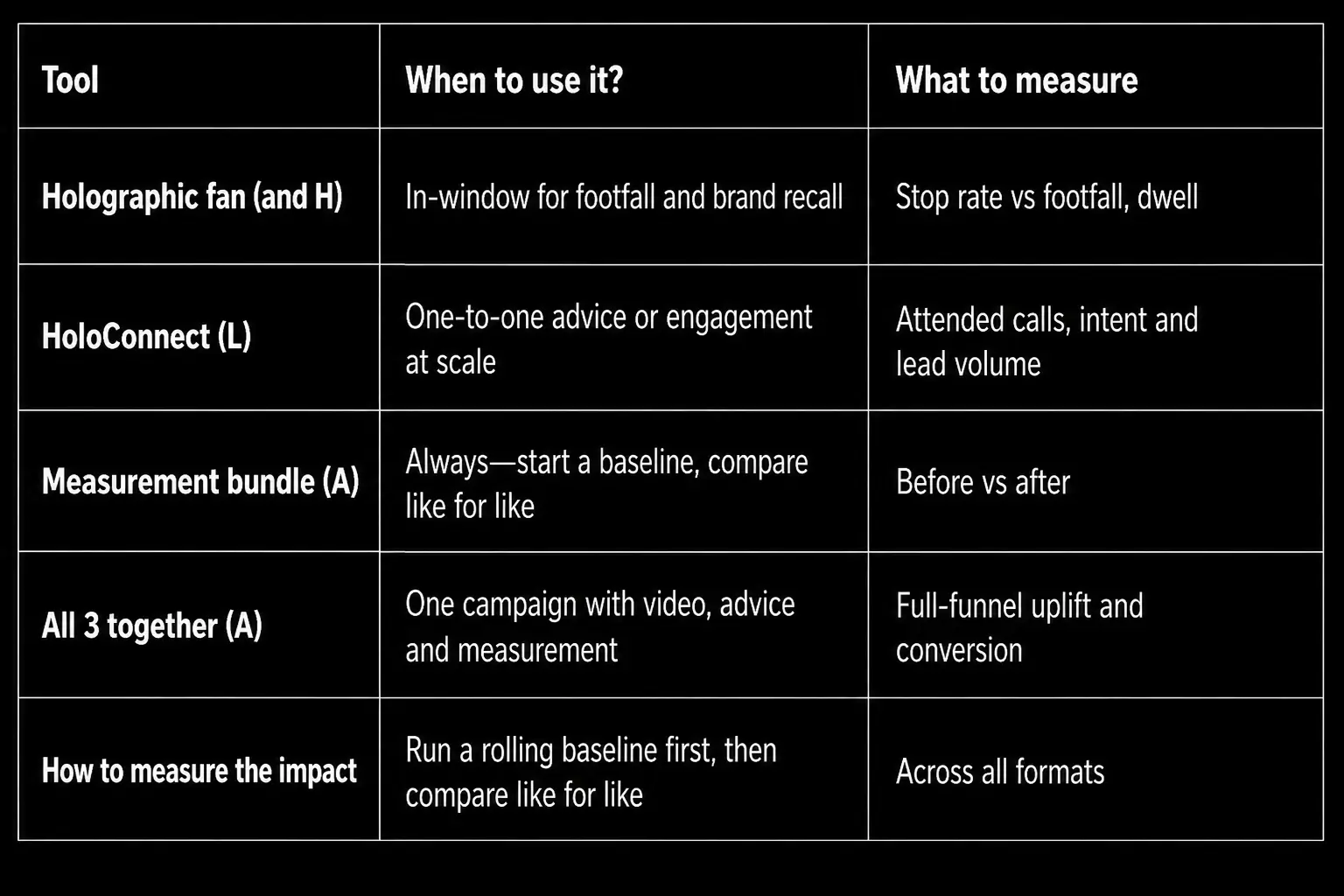
Ten trends do not mean ten budget lines. For most exhibitors,four moves capture most of the value, and the table ranks them by effortagainst effect: each one is small enough to pilot at a single show andmeasurable enough to defend in the review that follows.
Planningbackwards from the 2027 calendar
The trends reward the exhibitors who plan earliest.Device reservations and content briefs sit at D-60 per show; season contractson rented technology earn degressive rates; and the 3D assets built for thefirst show of 2027 run unchanged at the last one. The trap to skip is trendtourism: two trends executed to the baseline beat six half-installed, and thetable above is the antidote.
The formats behind trends 2, 5 and 8 live on the trade show stands page by Holovisio, from the fan to the life-size case to stagedtelepresence, with rental turnkey andquotes returned within 48 hours. The rest of the list costs less than itappears: most of it is discipline wearing a technology costume.
For the benefits case, read holograms for events; for the wider device families, the complete guide to holograms maps them all. The2027 calendar is already filling; the stands that will own it are beingbudgeted this month, four moves at a time.
Holovisio, the company behind hologramme.co, designs,produces and operates holographic displays (fans, HoloBox, pyramids, walls,projections) for companies, from Mercedes-Benz to Stryker. Rental or purchase,3D content included. Request a quote.
By the Holovisio team · hologramme.co
Boost your ROI with holograms
Your goals, our solution, your results.