By Pierre Chabot, Holovisio
A holographic projector is a device that makes an animated image appear in apparent relief, with no visible screen, most often by spinning a bar of LEDs at high speed. Consumer models are cheap; at Holovisio, a turnkey professional project starts at around €2,000 excluding VAT. This guide compares the four types of device, explains the 3D, 5D or 7D labels, and gives the seven criteria that prevent a bad purchase.
Holovisio is a holographic communication agency based in Orsay, France. We design turnkey holographic experiences for brands. We start from your objective to choose, among all holographic technologies, the most suitable device: holographic fan, HoloBox, projection, pyramid, transparent screen, among others. Our studio then creates the 3D content, and we handle delivery, installation and follow-up, for rental or purchase, for your trade shows, shop windows and events. We sell and rent holographic projectors: this guide also tells you when a consumer model is enough.
What is a holographic projector?
It is a display device that gives the illusion that an image floats in the air. The term is commercial: none of these devices produces a hologram in the physicist's sense, which requires a laser and a photosensitive medium. Our guide what is a hologram explains the difference.
What matters to a buyer is the effect: a bright image with no frame or edge, which stands out against empty space and stops the eye where a flat screen goes unnoticed. Under this name you will find LED fans, reflection pyramids, closed display cases and stage projection systems. They do not share the same price, readability or uses.
Do holographic projectors really exist?
Yes, as devices that create a floating image; no, if you expect the free-standing 3D image of science fiction. Every holographic projector on the market needs a medium for the light: spinning LEDs, a tilted pane, a transparent film or a closed case. An image visible from all sides in open air, with nothing behind it, does not exist. What exists works well, provided you choose it for the right place.

The four types of holographic projectors
Four technologies share the market, and the choice depends first on the venue and the viewing distance. The table summarises the trade-off.
| Type | Principle | Strength | Limit | Typical use |
|---|---|---|---|---|
| Holographic fan (LED fan) | Spinning LED bars | Bright, compact, readable in a shop window | Must be protected, round image | Window, stand, point of sale |
| Holographic pyramid | Reflection on tilted faces | Viewed over 270° or 360° | Loses contrast in strong light | Counter, museum, showroom |
| HoloBox | Closed case, 4K image | Person or product at full scale | Footprint, higher budget | Conference, reception, premium stand |
| Holographic projection | Projector and transparent film | Very large format, stage appearance | Dark room, heavy setup | Concert, keynote, rally |
Among products sold online as holographic projectors, most are LED fans of different sizes. That makes sense: it is the only format that stays readable in a shop window in daytime and fits in a box. The other formats are rarely bought online and are quoted per project.
3D, 5D or 7D holographic projector: what do these labels mean?
They are marketing claims, not technical categories. We know of no standard that defines a "5D" or "7D" projector. On consumer devices, "3D" means the image looks like it has depth; higher numbers borrow the vocabulary of motion-seat cinemas, where effects are added to the film. On an LED fan, none of this changes the physics. To compare two models, ignore the D and look at real resolution, brightness, blade protection and how content is updated.
How does a fan-type holographic projector work?
It relies on persistence of vision: the eye briefly retains each point of light, enough to merge spinning LED lines into a complete image.
- LED bars mounted on blades spin at high speed;
- a controller lights each LED at the right moment, according to its position on the circle;
- the eye no longer sees the blades, only the image they draw;
- black areas of the video stay switched off, so they are transparent and the object seems to float.
Content must therefore be created on a black background, for a round format. The step-by-step explanation is in our article how holographic fans work.
How much does a holographic projector cost?
At Holovisio, renting a holographic fan costs €300 to €500 excluding VAT per day, and a turnkey project starts at around €2,000 excluding VAT. Consumer models cost much less, but they are rarely protected or manageable remotely. The full breakdown is in our guide to how much a hologram costs.
| Holovisio option | Budget, excl. VAT |
|---|---|
| Rental of a holographic fan | €300 to €500 per day |
| Purchase of a professional fan | €2,000 to €10,000 |
| Turnkey project: fan, 3D content and installation | From around €2,000 |
| Rental of a HoloBox | €1,500 to €5,000 per event |
| Rental of a holographic wall | €3,000 to €12,000 |
| Full stage appearance | €15,000 to €80,000 and more |
For a trade show or a short campaign, hologram rental avoids tying up equipment. For a device that runs all year in a window, a hologram purchase pays off. For the most common format, you can rent or buy a holographic fan.
Are holographic projectors any good?
Professional ones are very good at stopping the eye; consumer ones are fine for decoration and tests. Both show a floating image. The difference lies in readability, safety, remote management and what happens if the device fails the day before a trade show.
| Criterion | Consumer model | Professional device |
|---|---|---|
| Intended use | Decoration, a few hours a day | Window or stand, several days in a row |
| Safety | Blades often exposed | Cover or installation out of reach |
| Management | App or memory card, device by device | Remote update of a whole fleet |
| Large format | A single fan | Several synchronised fans as a wall |
| Content | Library of generic animations | Custom 3D content for the round format |
| Service | Return by post | Installation, technician, on-site replacement |

How to choose a holographic projector: the seven criteria
Start from the venue and the viewing distance, never from the spec sheet. The criteria, in the order we check them:
- Viewing distance. It sets the diameter: a counter fan is read up close, a large fan from further away, and beyond that you need a wall of synchronised fans.
- Ambient light. A south-facing window or a glazed hall crushes contrast. Test the device on site, at the time people walk past.
- Real resolution. Ask for the number of pixels or LEDs, not the word "HD".
- Safety. A fan spins fast: in a shop or on an open stand, a protective cover is not optional.
- Management. For one device, an app is enough. For ten stores, you must update content everywhere from one point.
- 3D content. Who creates it, in the right format, at what price? It is the line that makes the result.
- Service. Warranty, replacement time, a technician on event day: at a trade show, a breakdown costs more than the device.
The four mistakes we see
Buying on the advertised diameter. The figure on the sheet is often the maximum image, not the sharp area. Ask for a video filmed in real conditions.
Playing a rectangular video. A commercial cropped into a circle, on a light background, does not float. Content is designed for the medium, which is what our 3D studio does.
Ignoring noise and heat. A fan makes a breath of air and warms up: plan ventilation and test it in the real space.
Forgetting window lighting rules. In France, the decree of 27 December 2018 requires shop window lighting to be switched off at 1 a.m. at the latest, or one hour after the end of activity if later. Choose a programmable device.
At Holovisio, in practice
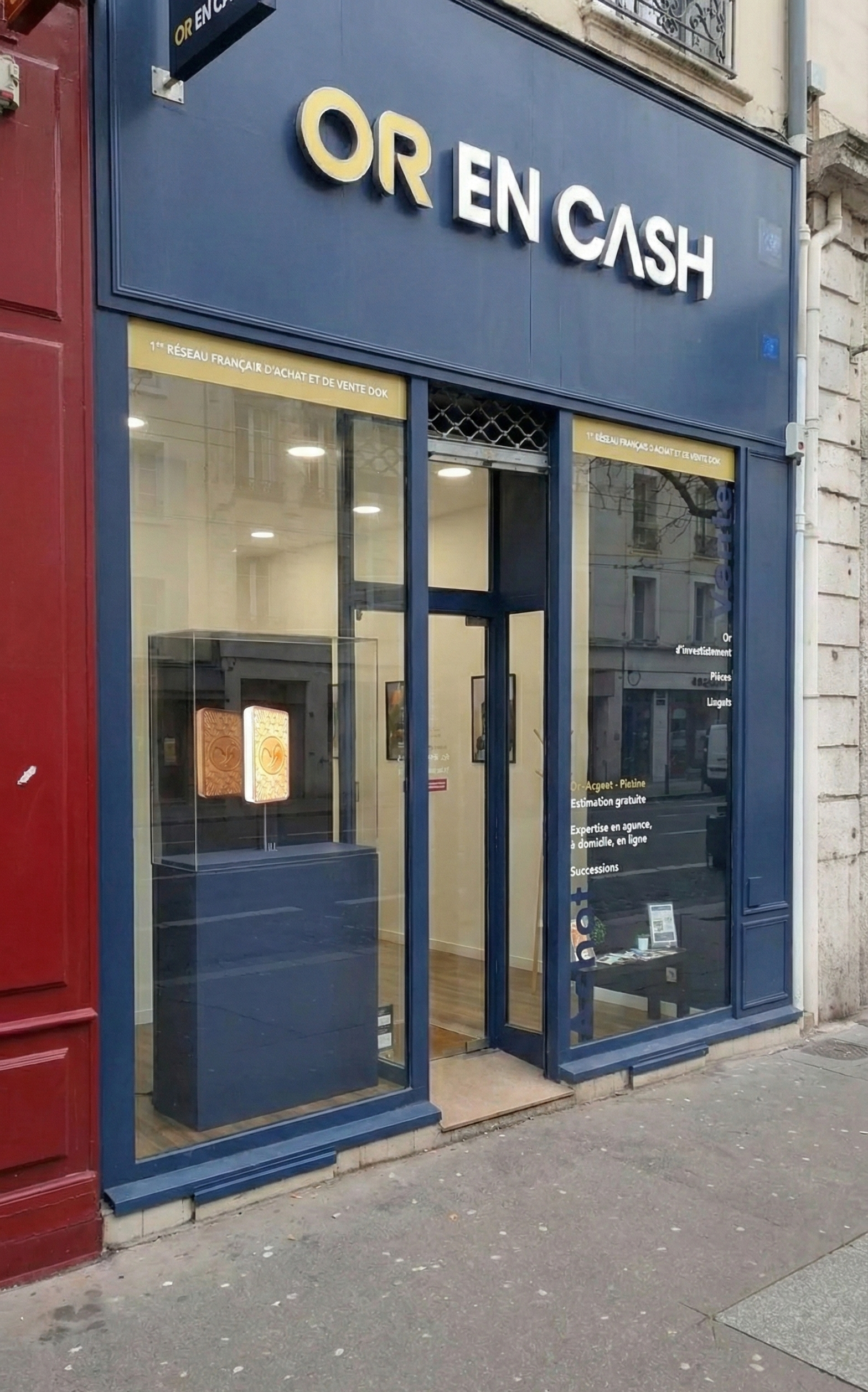
For Or en Cash, a gold buying and selling network, we installed a 65 cm Full HD fan under a cover, in a stand in the brand's colours, in the network's stores across France. Every unit is connected and content changes remotely from one central point (Or en Cash case). At the 2026 Paris International Agricultural Show, we recreated Biguine the Brahman cow at full scale on a wall of nine synchronised 65 cm fans (Brahman case).
Our position
The best holographic projector is neither the biggest nor the most expensive: it is the one that stays readable in your venue, safely, with content made for it. For personal use, a consumer model does the job. For a brand, the device matters less than the message, the location and the ability to change content without sending a technician. Not sure which format fits? Let's talk about your project.
Frequently asked questions about holographic projectors
Is holographic projection possible?
Yes, as an illusion. A video is reflected on a transparent film or pane, or drawn by spinning LEDs, so that an object or a person seems to appear in space. It is not a hologram in the physical sense, but the effect is convincing in the right conditions.
How much is a hologram projector?
Consumer models sold online are cheap. At Holovisio, renting a professional fan costs €300 to €500 excluding VAT per day, buying one €2,000 to €10,000 excluding VAT, and a turnkey project starts at around €2,000 excluding VAT, content and installation included.
What is the price of a 7D hologram projector?
The same as any other consumer projector: 7D is a marketing label, not a separate technology. Compare real resolution, brightness and blade protection instead. For professional use, refer to the Holovisio price table in this guide, which covers rental and purchase.
Does a holographic projector work in daylight?
Yes for an LED fan, indoors or behind a shop window, out of direct sunlight. Pyramids and film projection need a darker setting. Always test the device on site, at the time when people actually walk past, before you rent or buy.
Is a holographic projector dangerous?
A fan spins fast and its blades can hurt a hand. In a public place, it must sit under a protective cover or be mounted high, out of reach of visitors and children. The other formats, pyramids, HoloBox and projection, do not present this risk.
What is the difference between a holographic projector and a holographic fan?
Usually none. The holographic fan is the LED fan, the type of holographic projector most sold online. The word projector also covers pyramids, HoloBox cases and stage projection, which rely on other optical principles and suit other venues.
How do I create content for a holographic projector?
For a fan, create an animation on a black background, designed for a round format, with 3D or editing software, and export it in a format the device accepts. For a professional result, a studio used to these media designs the content with you.
Pierre Chabot, Holovisio, the company behind hologramme.co.
Boost your ROI with holograms
Your goals, our solution, your results.