

By Pierre Chabot, Holovisio
A holographic fan works by spinning a bar of LEDs so fast that persistence of vision merges each position of the blades into a single image that seems to float in the air. The blades disappear, only the light remains. This article explains the principle step by step, what a fan can and cannot display, and what it costs. If you are comparing models before renting or buying, our holographic fan buying guide covers sizes and selection criteria.
What is a holographic fan?
A holographic fan, also called a hologram fan or LED fan, is a display made of blades fitted with LEDs that rotate around a central motor. When it spins, the eye stops seeing the blades and sees an animated image instead, with no visible frame. It is not a hologram in the scientific sense, which is recorded with a laser: it is an optical illusion, and that is what makes it bright enough for a shop window. Our guide what is a hologram explains the difference.

How does a holographic fan work?
Three mechanisms work together: rotation, synchronised LEDs and persistence of vision.
- Rotation. A motor spins the blades at high speed. At that speed, the eye can no longer follow them and they become almost transparent.
- Synchronised LEDs. A controller knows the exact angle of each blade at every instant. It lights each LED with the colour of the pixel that should appear at that position of the circle.
- Persistence of vision. The retina keeps each point of light for a fraction of a second. The successive positions blend into one complete image, which seems suspended in the air.
The 3D effect comes from the content, not from the device. The image is flat, but an animation designed with depth, shadows and rotation, on a black background, gives the brain the impression of volume. The black background is essential: black pixels are simply LEDs switched off, so the eye sees through them.
What a holographic fan does and does not do
| It does | It does not |
|---|---|
| Display an animated image that seems to float, with no frame | Create an image you can walk around and see from behind |
| Stay readable in a shop window in daytime, out of direct sun | Work well in direct sunlight outdoors |
| Play short loops, logos and products in 3D | Show long texts or detailed price lists |
| Combine with other fans to form a large wall | Produce a sharp image on camera without the right settings |
Can you watch a movie on a hologram fan?
Technically yes, in practice no: a hologram fan plays video files, but it is not designed for long viewing. The image is round, there is generally no sound, and a film shot in 16:9 is cropped and loses its floating effect. A fan is made for short loops of a few seconds, designed for a black background and for a circular frame.
Some fans accept a live HDMI source, which lets you display a live feed or an interactive application. That is useful at an event, but it does not turn the device into a television. For a film or a long presentation, a conventional screen remains the right tool.
Are 3D hologram fans any good?
They are very good at one thing: stopping the eye in a window or on a trade show stand. A professional fan, with a dense LED bar, protection for the blades and remote content management, gives a clean and bright image. Entry-level consumer fans also exist: they are cheaper, but rarely protected or manageable remotely, which limits them in a shop or at an event.
Their limits are real. The image is only seen well from the front, the device must stay out of reach because the blades spin very fast, and it can flicker on camera if the shutter speed is not adjusted. The quality of the result depends as much on the content as on the hardware: a generic animation holds attention for a few seconds, a content designed for the medium by a 3D studio makes the difference.
How much does a holographic fan cost?
At Holovisio, renting a holographic fan costs €300 to €500 excluding VAT per day, and buying a professional fan costs €2,000 to €10,000 excluding VAT. 3D content, transport and installation come on top, except in a turnkey package.
| Holovisio option | Budget, excl. VAT |
|---|---|
| Rental of a holographic fan | €300 to €500 per day |
| Purchase of a professional fan | €2,000 to €10,000 |
| Turnkey project: fan, 3D content and installation | From around €2,000 |
| Rental of a holographic wall | €3,000 to €12,000 |
For a single trade show, hologram rental avoids tying up equipment. For a permanent window, a hologram purchase makes more sense. You can rent or buy a holographic fan from us, and the full price breakdown is in our guide to how much a hologram costs.
What a holographic fan looks like on a real project
Two Holovisio projects show the fan in a shop window and on a trade show stand.
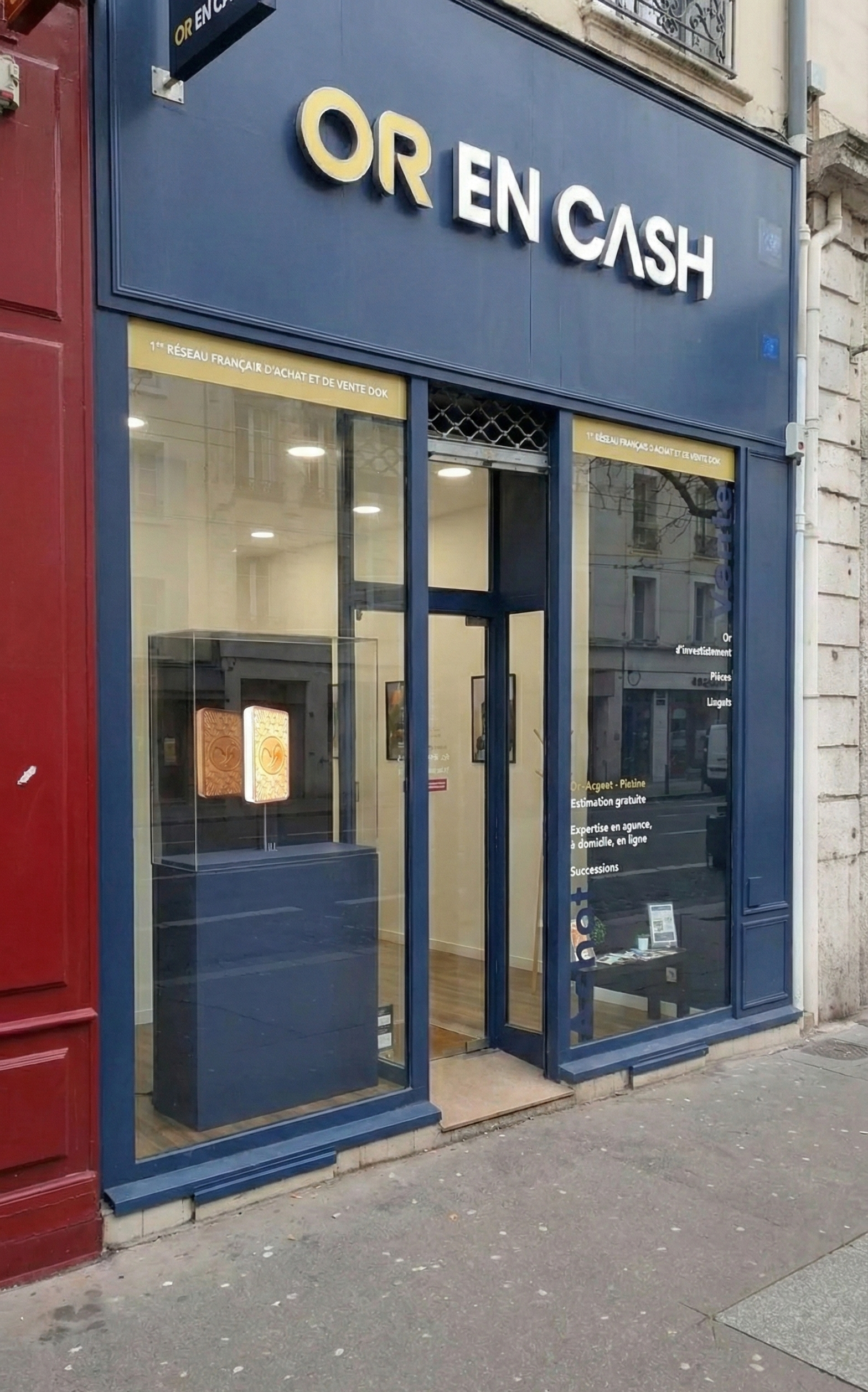
In shop windows, the Or en Cash network. We integrated a 65 cm Full HD fan under a cover, in a custom stand in the brand's colours, and deployed it in the network's stores across France. Every unit is connected and content changes remotely from one central point (Or en Cash case).
On a stand, the Brahman breeder. At the 2026 Paris International Agricultural Show, health restrictions banned the movement of cattle. We recreated Biguine the cow on a wall of nine synchronised 65 cm Full HD fans (Brahman case). For a large image, synchronised fans form a holographic wall.

Our position
A holographic fan is a simple machine with a striking effect: spinning LEDs and a trick of the eye. That simplicity is its strength. It is bright, compact and quick to install. It is not a screen and should not be used as one. Use it to stop the eye with a short message, protect it, and budget the content as seriously as the hardware. For a project, you can rent or buy a holographic fan, or let's talk about your project.
Holovisio is a holographic communication agency based in Orsay, France. We design turnkey holographic experiences for brands. We start from your objective to choose, among all holographic technologies, the most suitable device: holographic fan, HoloBox, projection, pyramid, transparent screen, among others. Our studio then creates the 3D content, and we handle delivery, installation and follow-up, for rental or purchase, for your trade shows, shop windows and events.
Frequently asked questions about holographic fans
Are holographic fans real holograms?
No, not in the scientific sense. A real hologram is recorded with a laser and rebuilds the light of an object. A holographic fan creates an optical illusion with spinning LEDs and persistence of vision. The result looks like a floating image, which is what brands need.
How much does a 3D hologram fan cost?
At Holovisio, renting a fan costs €300 to €500 excluding VAT per day, and buying a professional fan costs €2,000 to €10,000 excluding VAT. A turnkey project with 3D content and installation starts at around €2,000 excluding VAT. Consumer models sold online cost less.
Is a holographic fan dangerous?
The blades spin very fast, so the fan must never be within reach of the public. Professional installations place it under a transparent cover or high on a wall or stand. Installed this way, it presents no particular risk to visitors or to staff in a store.
Does a holographic fan work in daylight?
Yes, in a shop window or indoors, out of direct sunlight. Direct sun on the device crushes the contrast and the image loses its floating effect. Check the orientation of the window and the light at different times of day before choosing the location.
Why does a holographic fan flicker on video?
Because the camera shutter captures the blades at a precise moment, while the eye merges successive positions. Adjusting the shutter speed of the camera or phone reduces the flicker. Check this before an event if visitors or press are likely to film the device.
What content works on a holographic fan?
Short loops designed for a black background and a round frame: a logo, a product in rotation, a short promise. Black areas stay transparent, which creates the floating effect. A 16:9 video cropped into a circle looks truncated, so content should be designed for the medium.
Can several holographic fans be combined?
Yes. Several fans synchronised by a controller can display a single large image, called a holographic wall. Each fan shows one part of the picture. This format suits trade show stands and large spaces, where a single fan would be too small to be seen.
Pierre Chabot, Holovisio, the company behind hologramme.co.
Boost your ROI with holograms
Your goals, our solution, your results.


