

In-store hologram: GrandOptical launches Meta Ray-Ban Display on the Champs-Élysées
Challenge
For the French launch of Meta Ray-Ban Display on 13 October 2026, GrandOptical installed a 360° hologram in its flagship store at 138 avenue des Champs-Élysées: two back-to-back holographic fans under a dome, making visible a technology designed to go unnoticed. Meta Ray-Ban Display are the first Meta glasses with a built-in display sold in France, priced at €899 with the Meta Neural Band wristband. Their European release, planned for early 2026, was postponed by Meta in January due to very limited stock versus demand (Selectra, 26 September 2026). At launch, Meta announced only one physical store in Paris where they could be tried on. The challenge lies in the product itself. According to Meta, the colour display in the right lens stays invisible to people around the wearer, and the Meta Neural Band is controlled by tiny finger gestures nobody notices. On a display stand, the pair looks like a classic Ray-Ban. Yet this product sells through demonstration: in the United States, Meta first sold it only in stores after a try-on. For GrandOptical, the goal was twofold: signal to passers-by that a launch was happening here, and help them understand in a few seconds what the frame hides, before trying it on with an optician.
Concept
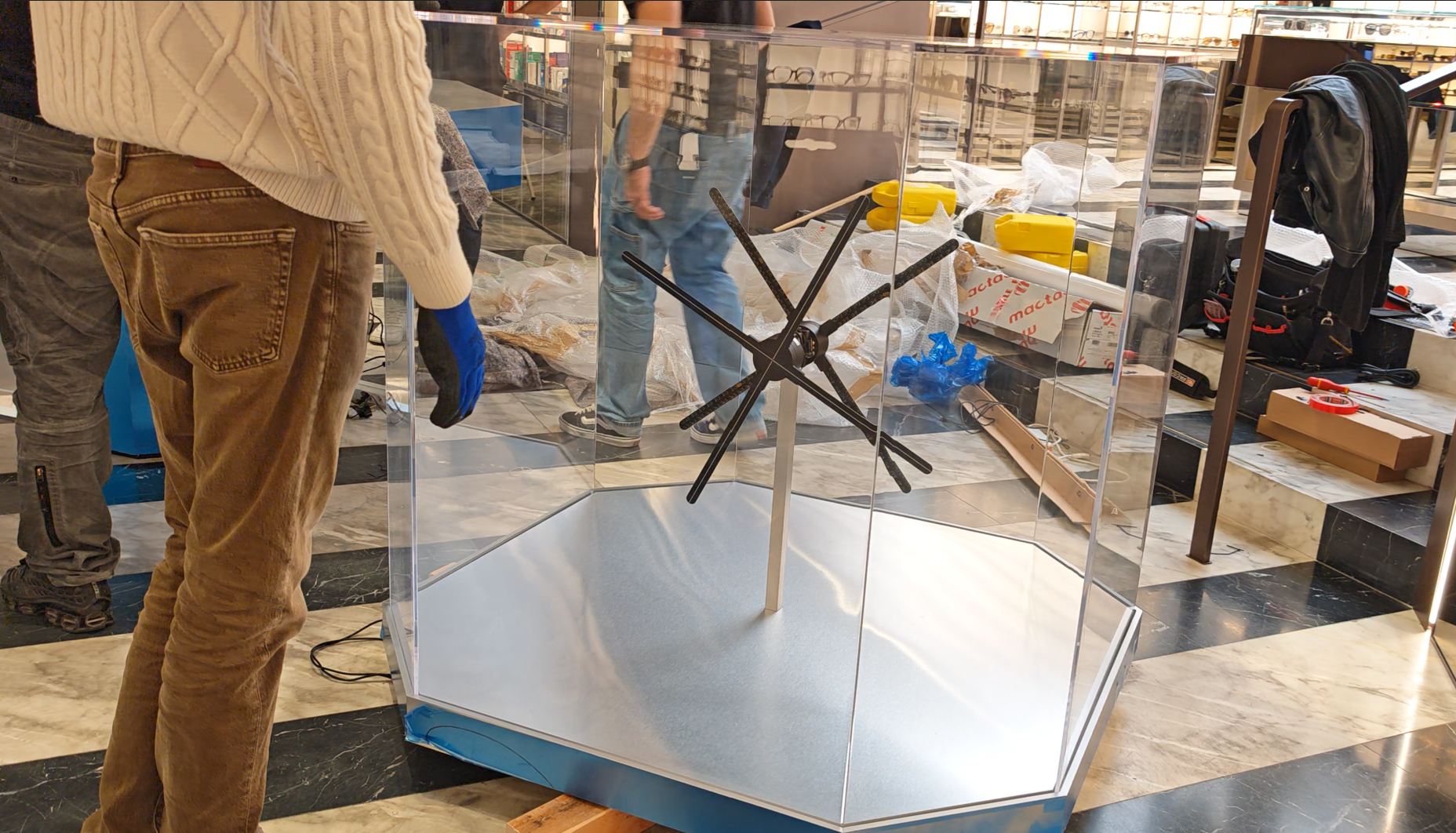
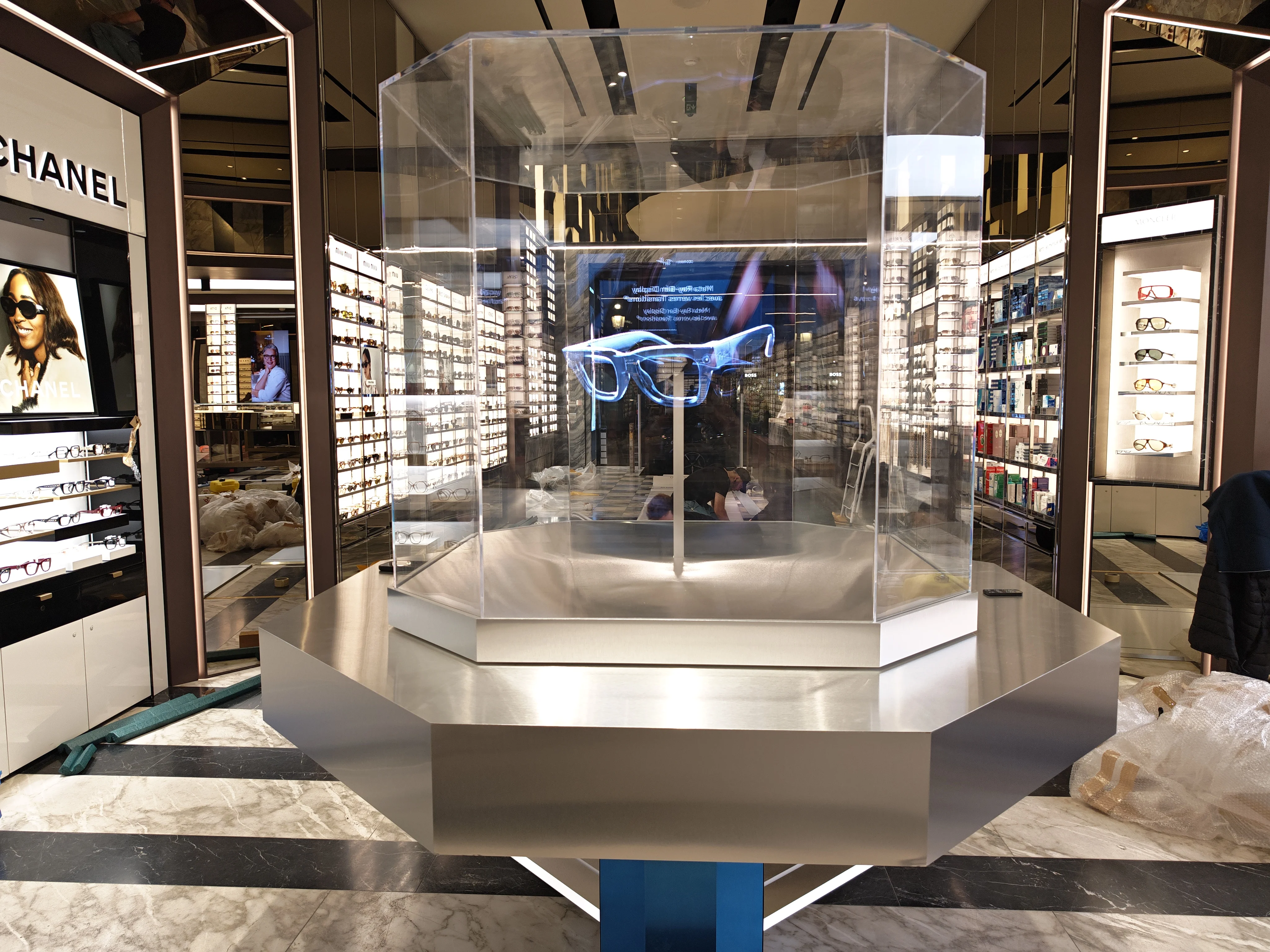
Holovisio, a hologram specialist for events and retail, designed a setup for a store where people move around from every side: two 65 cm holographic fans mounted back to back under a Plexiglas dome, built into a display table. A single fan is viewed from the front. Back to back, the two fans remove the blind side: the hologram reads from both sides, for a 360° view around the table. Visitors no longer need to stand in the right spot to see the product. The dome protects the spinning fans and gives the whole setup the look of a showcase for a rare piece, in line with a highly anticipated product. The 65 cm format keeps the image readable from a distance, among the frame displays. The 3D animation made the Meta Ray-Ban Display float in mid-air and revealed what the glasses do not show on their own: the display built into the right lens and the Meta Neural Band. The hologram acted as a first demonstration, before the hands-on try. The Holovisio team installed the setup overnight from 12 to 13 October, after closing time, so the store was ready when doors opened on launch day.
Résultat
The setup gave the launch what the product could not provide on its own: a visible signal. Where a frame on a stand goes unnoticed, a pair of glasses floating under its dome stands out from the store entrance. For GrandOptical opticians, the hologram is a natural conversation starter: a customer who asks “what is that?” is already halfway into the demo. For the retailer, the benefit is also brand image: its Champs-Élysées flagship stays associated with the French launch of the first Meta glasses with a display, staged in a way that matches the address. The lesson applies to any tech product: when an innovation is designed to disappear, you need a medium that shows it at the moment of purchase. The hologram does not replace the try-on, it makes people want to do it.
Let's discuss your project